
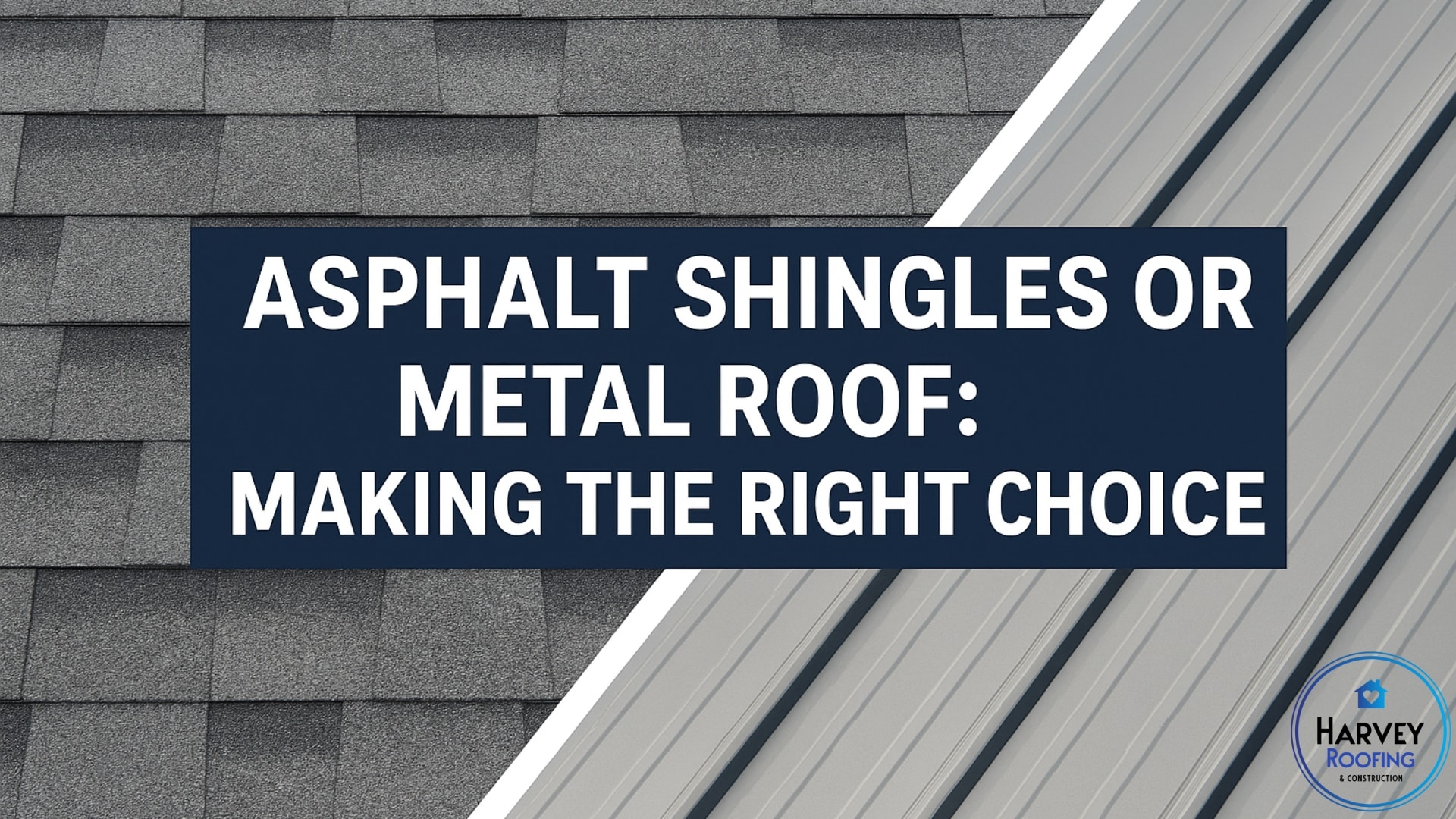
Choosing between asphalt shingles or a metal roof is a significant decision for homeowners. At Harvey Roofing & Construction, we understand the importance of this choice and its impact on your home’s longevity and value.
This guide will help you navigate the pros and cons of each option, considering factors like cost, durability, and energy efficiency. By the end, you’ll have the knowledge to make an informed decision that best suits your needs and budget.
Why Choose Asphalt Shingles
Affordability and Value
Asphalt shingles remain a popular roofing choice for many homeowners due to their cost-effectiveness. Repairing or replacing roof shingles costs between $350 and $1,200, depending on the number of shingles your roof repair company needs to replace. This makes them an attractive choice for budget-conscious homeowners who want a quality roof without breaking the bank.
Versatility in Design
The wide array of colors and styles available for asphalt shingles allows homeowners to match their roof to their home’s aesthetic. From basic three-tab shingles to more premium architectural options, there’s a style for every taste. This versatility (coupled with their affordability) explains why asphalt shingles are the most common roofing material in North America.
Easy Installation and Repairs
The installation of an asphalt shingle roof typically takes only one to two days, which is faster than metal roof installation. This quicker installation time often leads to lower labor costs. When it comes to repairs, contractors can easily replace individual shingles without major structural changes, which makes maintenance more straightforward and cost-effective.
Lifespan Considerations
While asphalt shingles offer many benefits, they do have a shorter lifespan compared to metal roofs. On average, asphalt shingles last between 15 to 30 years, while metal roofs can last 50 years or more. However, proper maintenance and regular inspections can maximize the lifespan of an asphalt shingle roof.
Weather Resistance Challenges
In areas prone to extreme weather, asphalt shingles may face challenges. They can be more susceptible to damage from high winds, heavy rain, and hail. Some insurance companies may even charge higher premiums for homes with asphalt roofs due to this vulnerability.
High-quality asphalt shingles (such as those from Malarkey and ATLAS) offer improved durability and weather resistance compared to standard options. While no roofing material is impervious to extreme conditions, choosing premium shingles can provide better protection for your home.
As we move on to discuss metal roofs, it’s important to weigh these factors against your specific needs and local climate conditions. The next section will explore the unique advantages and potential drawbacks of metal roofing systems.
Why Metal Roofs Outperform Asphalt Shingles
Unmatched Longevity and Durability
Metal roofs can last between 40 to 80 years, which significantly surpasses the lifespan of asphalt shingles. This extended longevity results in fewer replacements over time, leading to substantial cost savings for homeowners. The Metal Roofing Alliance reports that a metal roof can last up to three times longer than a traditional asphalt shingle roof.

Metal roofs excel in extreme weather conditions. They withstand wind gusts up to 140 mph, making them an ideal choice for areas prone to hurricanes or severe storms. This resilience often translates to lower insurance premiums for homeowners who opt for metal roofs.
Energy Efficiency and Environmental Benefits
Metal roofs reflect solar radiant heat, which can reduce cooling costs by 10-25%. The Cool Metal Roofing Coalition states that a highly reflective and emissive metal roof can reduce urban air temperatures by as much as 12 degrees Fahrenheit. This not only cuts energy bills but also creates a more comfortable living environment.
From an environmental standpoint, metal roofs stand out as a clear winner. They are 100% recyclable at the end of their life (unlike asphalt shingles which contribute to landfill waste). Many metal roofs also contain recycled materials, further reducing their environmental impact.
Fire Resistance and Low Maintenance
Metal roofs carry a Class A fire rating (the highest possible). This superior fire resistance can prove vital in areas prone to wildfires. In contrast, asphalt shingles typically have a Class C rating, offering less protection against fire spread.
Maintenance requirements for metal roofs remain minimal. They resist mold, mildew, and rot, and don’t crack or curl like asphalt shingles. This low-maintenance nature saves homeowners time and money on repairs and replacements over the years.
Cost Considerations
While the initial cost of a metal roof exceeds that of asphalt shingles, the long-term benefits often justify this upfront investment. Homeowners should weigh their budget, local climate, and long-term plans when deciding between these roofing options.
The decision between metal and asphalt roofing involves careful consideration of various factors. In the next section, we’ll explore these factors in detail to help you make an informed choice for your home.
What Factors Should Guide Your Roofing Choice?
Climate and Weather Patterns
Your local climate determines the most suitable roofing material. In areas with severe weather (such as parts of Texas that experience frequent hailstorms or high winds), metal roofing often proves superior. Metal roofs are tested for wind uplift resistance according to standards set by the International Building Code, which helps ensure their performance in extreme weather conditions.

For regions with milder weather conditions, high-quality asphalt shingles might suffice. Malarkey and ATLAS shingles provide enhanced durability and weather resistance compared to standard options.
Long-Term Cost Analysis
The initial cost of metal roofing significantly exceeds that of asphalt shingles, but it’s important to consider the long-term financial implications. Metal roofs typically last 40-70 years, while asphalt shingles usually need replacement after 15-30 years. This longevity can result in significant savings over time.
Metal roofs can also reduce energy costs. They can decrease cooling costs by 10-25% due to their reflective properties. These energy savings (combined with lower maintenance costs) can offset the higher initial investment in metal roofing over time.
Aesthetic and Regulatory Considerations
Your home’s appearance and neighborhood regulations are important factors. Metal roofs offer a modern look, but they might not blend well in neighborhoods dominated by traditional asphalt shingle roofs. Some homeowners’ associations have specific rules about roofing materials and colors.
Asphalt shingles provide a wide range of color options and styles, which makes them versatile for various architectural designs. However, metal roofing technology has advanced, now offering options that mimic the look of other materials (including asphalt shingles).
Energy Efficiency Requirements
The energy efficiency of your roof impacts your home’s overall energy consumption. Metal roofs excel in this area, as they reflect solar radiant heat. This reflective property can lead to substantial reductions in cooling costs, especially in warmer climates.
Asphalt shingles, while less energy-efficient than metal, have also improved in recent years. Some manufacturers now offer “cool roof” shingles that reflect more sunlight and absorb less heat than standard shingles.
Maintenance Expectations
Your willingness and ability to maintain your roof should influence your choice. Metal roofs require minimal maintenance, resist mold and mildew, and don’t crack or curl. This low-maintenance nature saves homeowners time and money on repairs over the years.
Asphalt shingles, while generally low-maintenance, may require more frequent inspections and occasional repairs. They can be more susceptible to damage from severe weather and may need replacement of individual shingles over time.
Final Thoughts
Asphalt shingles or metal roofs both offer unique advantages for homeowners. Asphalt shingles provide affordability and design versatility, while metal roofs excel in longevity and energy efficiency. Your choice should depend on factors such as local climate, budget, and long-term plans for your home.

The right roofing material can significantly impact your home’s value and maintenance costs. Consider your area’s weather patterns, your home’s architectural style, and any neighborhood regulations that might affect your decision. A well-chosen roof will protect your home and enhance its appearance for years to come.
For expert advice tailored to your specific needs, we recommend consulting with roofing professionals. At Harvey Roofing & Construction, we specialize in both asphalt shingle and metal roofing installations. Our team can provide guidance to help you select the best roofing option for your home.
Harvey Roofing & Construction
817-422-4847
www.HarveyRoofingTX.com
5712 Regalview Dr
Joshua, TX 76058





Harvey Roofing & Construction proudly provides roof repair and roof replacement services to: Burleson, Joshua, Crowley, Cleburne, Rio Vista, Whitney, Granbury, Glen Rose, Crowley, Godley, Mansfield, Midlothian, Cedar Hill, Waxahachie, Alvarado, Fort Worth, Haltom City, Everman, Forest Hill, White Settlement, Arlington, Pantego, Grand Prairie, Keller, Haslet, Benbrook, Aledo, Annetta, Willow Park, Azle, Weatherford, Springtown, Saginaw, North Richland Hills, Hurst, Euless, Bedford, Watauga, Irving, Colleyville, Grapevine, Southlake, Roanoke, & surrounding areas.