
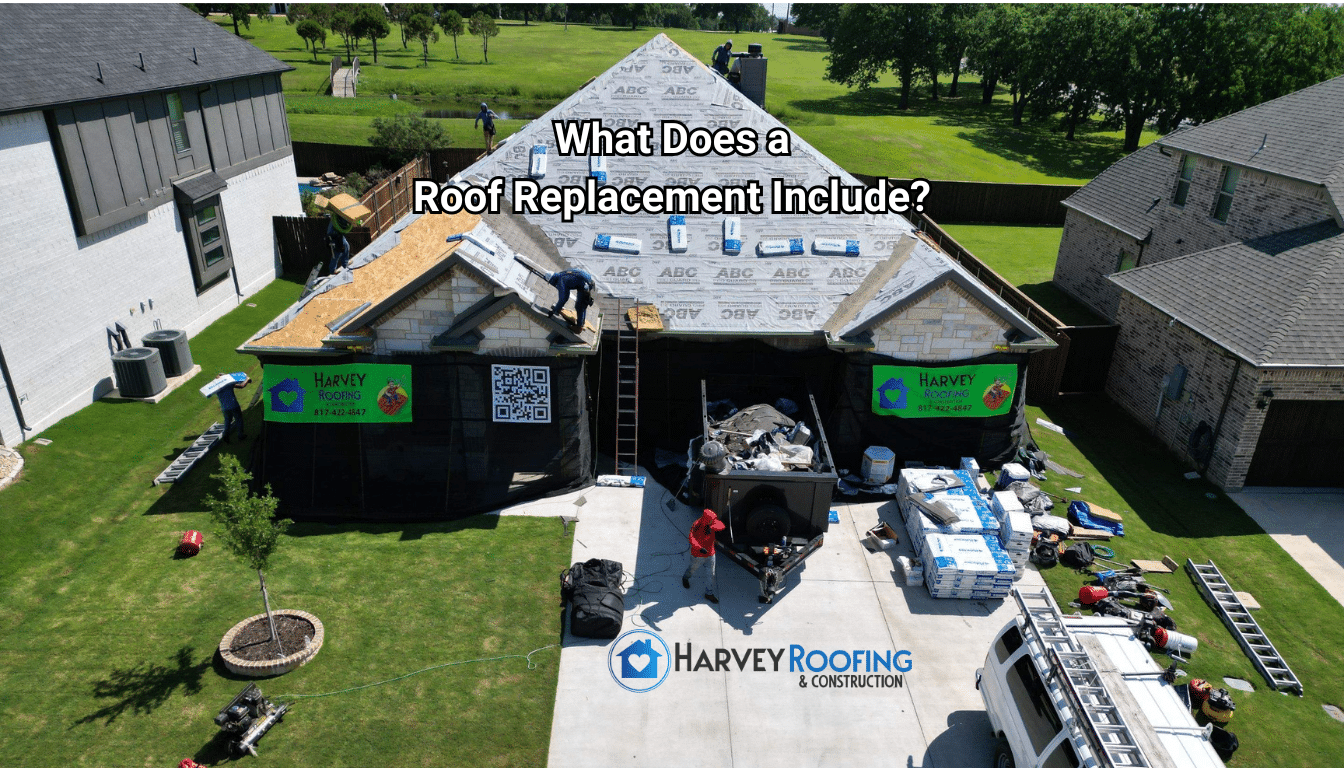
A roof replacement is a significant home improvement project that requires careful planning and execution. At Harvey Roofing & Construction, we understand the importance of a well-maintained roof for protecting your home and family.
This comprehensive guide will walk you through the entire process of what a roof replacement entails, from initial assessment to post-installation steps. We’ll cover everything you need to know to make informed decisions about your roofing project.
How We Assess and Plan Your Roof Replacement
Comprehensive Roof Inspection
Our team starts every roof replacement project with a detailed inspection. We examine all aspects of your roof, from shingles to the underlying structure. The National Roofing Contractors Association recommends a self-check at least twice a year in addition to professional inspections. During our inspection, we look for signs of wear and tear (such as cracked or missing shingles, water stains, or sagging areas).
Evaluation of Damage Extent
After the inspection, we assess the extent of any damage found. This evaluation helps us determine if a full replacement is necessary or if repairs might suffice. The National Association of Home Builders reports that asphalt shingle roofs typically last about 20 years. If your roof approaches or surpasses this age, a full replacement might prove the most cost-effective solution in the long run.
Material Selection
We discuss material options with you based on your roof’s condition. Our specialties include durable Malarkey and ATLAS asphalt shingles, as well as metal roofing. Each material offers unique benefits, and we help you choose the best option based on your home’s architecture, local climate, and personal preferences. Metal roofs, for example, can last up to 50 years and excel at reflecting heat (potentially reducing your cooling costs).
Project Timeline
The final step in our assessment and planning phase involves creating a comprehensive project timeline. We consider factors such as your roof’s size, the chosen materials, and potential weather conditions. A typical roof replacement takes about 1-2 days on average, but this can vary depending on the project’s complexity. We provide you with a clear schedule, ensuring you know exactly what to expect throughout the process.
Our meticulous approach to assessment and planning sets the stage for a smooth, efficient, and high-quality roofing project. This careful preparation minimizes surprises and ensures your new roof will protect your home for years to come. As we move forward, let’s explore the actual roof replacement process and what it entails.
How Does the Roof Replacement Process Work?
The roof replacement process requires precision, skill, and attention to detail. We follow a systematic approach to ensure your new roof is installed correctly and efficiently.

Removal of Old Roofing Materials
The first step involves stripping away old shingles, underlayment, and any damaged decking. Our team uses specialized tools to remove these materials quickly while protecting your property from debris. The National Roofing Contractors Association emphasizes that proper removal of old materials is essential for the longevity of the new roof.
Inspection and Repair of Roof Deck
After removal of old materials, we thoroughly inspect the roof deck. This wooden layer provides the foundation for your new roof. We check for any signs of water damage, rot, or structural issues. If we find problems, we address them immediately.
Installation of New Underlayment and Flashing
Once we ensure the deck is in good condition, we install a new layer of underlayment. This water-resistant (or waterproof) barrier provides an extra layer of protection against leaks. We also install new flashing around chimneys, vents, and other roof penetrations. Proper flashing installation is critical.
Application of New Roofing Materials
With the underlayment and flashing in place, we begin installing your chosen roofing materials. Whether you’ve opted for asphalt shingles or a metal roof, our team follows manufacturer specifications to ensure proper installation. We pay close attention to nailing patterns and overlap to maximize your roof’s weather resistance.
Installation of Ridge Caps and Ventilation
The final step in the installation process adds ridge caps and ensures proper ventilation. Roof ridge vents play a crucial role in maintaining proper attic ventilation, contributing to energy efficiency and the longevity of the roofing.
Throughout this process, we maintain open communication with you, keeping you informed of our progress and any unexpected issues we might encounter. Our goal is to provide you with a durable, attractive roof that will protect your home for years to come. Now, let’s explore the important steps that follow the installation process to ensure your new roof’s longevity and performance.
What Happens After Your Roof Is Installed?
Quality Inspection Process
After the installation of your new roof, a thorough inspection takes place. Professional roofers check for proper shingle placement, correct nailing patterns, and secure flashing installation. This inspection goes beyond a simple visual check. Roofers physically test the integrity of the roof, ensuring every component is properly secured and sealed.
The National Roofing Contractors Association emphasizes the importance of this final inspection for identifying potential issues before they become problems. Inspectors look for even the smallest discrepancies, such as loose shingles or improperly sealed edges, which could lead to leaks or wind damage if left unaddressed.
Site Cleanup Procedures
A professional roofing job includes more than just installing a new roof. It also involves leaving your property in pristine condition. The cleanup process should be meticulous, involving the use of magnetic sweepers to collect any stray nails or metal debris that might have fallen during the installation.
Professional roofers don’t just focus on your roof and immediate surroundings. They scour your entire property, including flower beds, bushes, and lawn areas, to ensure no roofing materials are left behind. This thorough cleanup protects your family, pets, and property from potential hazards.
Homeowner Education on Roof Maintenance
A new roof is a significant investment, and proper maintenance is key to maximizing its lifespan. Professional roofers should take the time to educate homeowners on essential maintenance practices. This includes advice on regular inspections, cleaning gutters, and identifying early signs of potential issues.

Experts recommend inspecting your roof at least twice a year (typically in spring and fall). They also stress the importance of promptly addressing any issues, no matter how small they might seem. A minor leak or a few missing shingles can quickly escalate into major problems if left unattended.
Warranty Information and Documentation
The final step in the post-installation process involves providing detailed warranty information. Roofers should explain the coverage for both materials and workmanship, ensuring you understand what’s protected and for how long.
Most asphalt shingle manufacturers offer warranties ranging from 15 to 50 years, while metal roofs often come with even longer guarantees. Professional roofers provide all necessary documentation and explain the steps to take if you ever need to make a warranty claim.
This comprehensive post-installation process ensures that your new roof not only looks great but is also set up to protect your home for decades to come. It’s part of a professional roofer’s commitment to delivering not just a product, but peace of mind for their customers.
Final Thoughts
A roof replacement involves the complete removal and renewal of your roof’s components. This complex process requires skilled professionals to ensure proper installation and long-lasting protection for your home. At Harvey Roofing & Construction, we understand the intricacies of roof replacements and strive to deliver exceptional results.
We use top-quality materials and follow industry best practices to provide superior protection against the elements. Our team specializes in durable Malarkey and ATLAS asphalt shingles, as well as metal roofing, offering tailored solutions to meet your specific needs. We also conduct thorough cleanups and detailed quality inspections to ensure your complete satisfaction.
Choosing the right roofing contractor is as important as selecting the right materials for your roof replacement. Our expertise in residential and commercial roofing (combined with our local knowledge and full insurance coverage) makes us a trusted choice for homeowners in Johnson, Tarrant, and surrounding counties in Texas. We aim to provide reliable protection and value for your home for years to come.
Harvey Roofing & Construction
817-422-4847
www.HarveyRoofingTX.com
5712 Regalview Dr
Joshua, TX 76058





Harvey Roofing & Construction proudly provides roof repair and roof replacement services to: Burleson, Joshua, Crowley, Cleburne, Rio Vista, Whitney, Granbury, Glen Rose, Crowley, Godley, Mansfield, Midlothian, Cedar Hill, Waxahachie, Alvarado, Fort Worth, Haltom City, Everman, Forest Hill, White Settlement, Arlington, Pantego, Grand Prairie, Keller, Haslet, Benbrook, Aledo, Annetta, Willow Park, Azle, Weatherford, Springtown, Saginaw, North Richland Hills, Hurst, Euless, Bedford, Watauga, Irving, Colleyville, Grapevine, Southlake, Roanoke, & surrounding areas.